
Royal Crown: Kingdom Wars
4x.comStrategy
4.733.00 Reviews
- Version
- 102.3084.5389
- Installs
- 100.00K
- Age Rating
- Teen
Screenshots
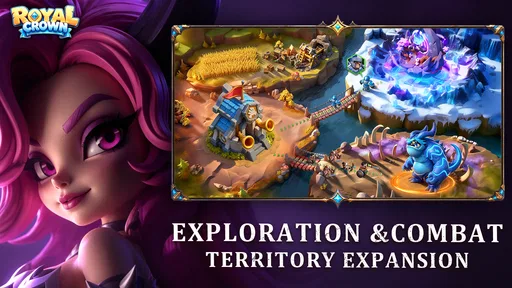
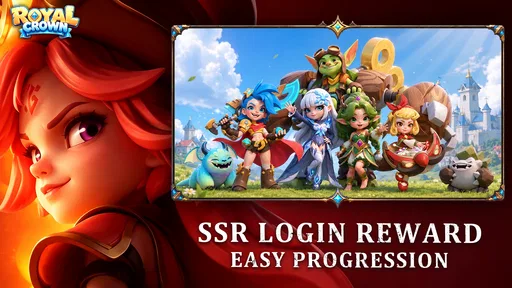
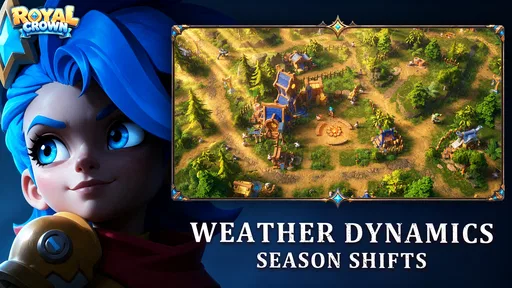
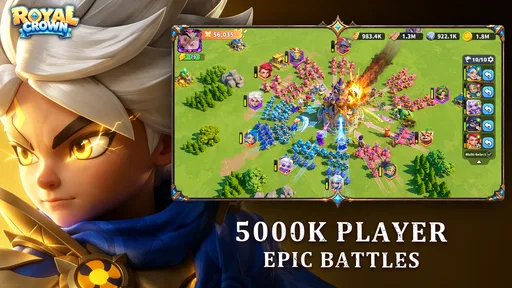
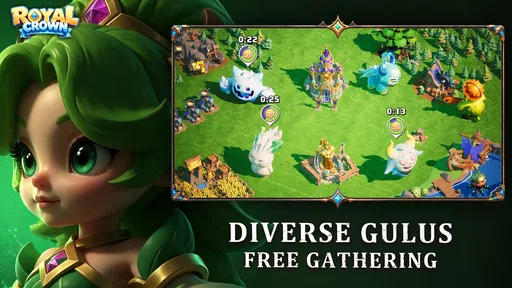
Our Review of Royal Crown: Kingdom Wars
 Analysis by Appyee
I spent time with Royal Crown: Kingdom Wars as a strategy game, paying particular attention to how it feels when a game is used around a household rather than by one person in isolation. Its central appeal is easy to understand: you develop a kingdom, direct heroes, and take part in alliance wars. That combination gives the game a more social rhythm than a purely solo strategy title, but it also means that expectations about time, spending, and shared devices matter.
The game is free to download, which makes it simple to try without an upfront purchase. It is published by 4x.com and carries a Teen content rating. I found that combination important when thinking about who should play it, because the fantasy setting may look approachable at first, while the competitive and alliance-focused structure asks for more maturity than a very young child usually brings to a long-term strategy game.
Royal Crown: Kingdom Wars has a 4.7 average from around 226 ratings, with roughly 33 written reviews, and has passed 100,000 installs. Those figures suggest that it has found an audience, although they are not a substitute for deciding whether its particular style suits you. The current version is 102.3084.5389, and it requires Android 10 or later. I would check that requirement before planning to use it on an older shared tablet or phone.
How Royal Crown: Kingdom Wars fits into everyday household play
In a shared home, I’d make the game’s account owner clear before anyone starts: the device may belong to everyone, but a developing kingdom and its alliance choices are easier to manage when one person has the final say. I’d also agree on a stopping point, so a quick visit doesn’t quietly become an open-ended household activity. That makes it easier to see whether its recurring strategy rhythm fits the way your home spends time together.
A game that works best when everyone knows whose kingdom it is
On a shared device, the first practical question is not whether the game is entertaining. It is whether the household can keep one player’s progress, decisions, and purchases separate from another person’s. A kingdom-building game is not like a quick puzzle that anyone can open for a few minutes without consequences. When one person upgrades buildings, spends resources, or accepts an alliance responsibility, that action belongs to the active game account and can affect the next session.
For that reason, I would treat Royal Crown: Kingdom Wars as a personal game even if the phone or tablet is shared. Before handing the device to someone else, I would make a clear habit of checking which account is active and whether the previous player has finished their session. That small pause is more useful than assuming the game will automatically understand which member of the household is playing.
A realistic example is a family tablet used after dinner. One person may want to check the kingdom and prepare for an alliance event, while another wants to try the hero commands. If both players use the same active profile, the second session can easily change the first player’s plans. The better arrangement is simple: one person manages the established kingdom, while others watch, discuss decisions, or use their own separate access where available. I would not rely on memory alone when the device changes hands frequently.
Why the strategy loop feels different from a casual mobile game
The game’s appeal comes from making several connected decisions rather than tapping through one isolated challenge. Building the kingdom gives you a sense of long-term direction. Commanding heroes adds a more active layer, while alliance wars introduce decisions that can involve people beyond your immediate household. I liked that these elements make a short check-in feel meaningful, but they also create pressure to return regularly and keep track of what is happening.
Compared with a traditional single-player strategy game, the alliance element makes your choices feel less private. Compared with a lightweight city builder, the hero and war focus gives the game more urgency. The trade-off is that it may be less relaxing than a game designed entirely around decoration or slow personal progress. If you want something that can be paused mentally the moment you close it, this may not be the best fit.
I also would not compare it directly with a fast action game. The satisfaction here comes from planning, timing, and seeing a kingdom develop, not from constant reflex-based play. Players who enjoy thinking several steps ahead will probably get more from it than someone looking for a quick match with an immediate result.
Setting boundaries before the first serious session
Because the game is free but includes in-app purchases ranging from $0.99 to $499.99 per item, I would discuss spending before installing it on a shared device. The wide range matters more than the low entry cost. Free access removes the barrier to trying the game, but it does not mean every later choice is cost-free. A child or guest player should not be left to interpret purchase prompts without an adult’s agreement.
I would also decide who is allowed to make strategic changes. In a shared household, “just looking” can turn into collecting rewards, moving through a menu, or confirming an action. A useful rule is that the main account holder handles purchases, alliance commitments, and major upgrades. Other household members can learn by observing or by playing on a separate account rather than experimenting with someone else’s kingdom.
This is not about making the game feel formal. It is about protecting the enjoyment of the person who has invested time in building progress. A strategy game becomes frustrating quickly when a carefully planned development path is changed accidentally. The same boundary also reduces arguments over who caused a loss or used a valuable resource.
Coordinating heroes and alliance responsibilities
The hero-commanding layer gives Royal Crown: Kingdom Wars a useful role as a conversation game. I found it easy to imagine two people discussing which approach seems wiser, especially when one player enjoys long-term kingdom planning and another prefers thinking about the heroes themselves. That kind of cooperation can make a shared session more engaging than silently taking turns.
Still, cooperation works best when one person has final responsibility for the account. Two players may agree on the broad plan but disagree about the next action. If the game presents a decision that cannot be undone, the household needs a simple convention: pause, explain the choice, and let the account owner confirm it. This is a small workflow, but it avoids the common shared-device problem of someone acting quickly because they thought they were only helping.
Alliance wars add another coordination issue. A player may feel that participation is part of the fun, while someone else in the household may see it as an obligation that interrupts their routine. I would avoid promising other players more involvement than the account owner can realistically provide. If your schedule is irregular, it is better to join social play with modest expectations than to treat every alliance request as a responsibility.
This is one area where Royal Crown: Kingdom Wars differs from a completely solo alternative. A solo strategy game lets you optimize at your own pace. Here, the social layer can create memorable moments, but it can also make the game harder to fit around school, work, meals, or bedtime. I would choose the alliance side for connection, not because I want another task list.
Age, trust, and the meaning of the Teen rating
The Teen rating should shape how I introduce the game to younger members of a household. I would not present it as a children’s game simply because it uses a kingdom and heroes. The competitive setting, alliance interaction, and purchase system all call for an older player or active adult guidance. The right question is not only whether a child understands the fantasy theme, but whether they can manage shared-account boundaries and resist making an unplanned purchase.
Trust also matters between adults. A partner or roommate may be perfectly capable of playing responsibly, yet still make choices that conflict with the account owner’s plans. The safest arrangement is transparency: say when you are opening the game, avoid changing another person’s kingdom without permission, and keep spending decisions with the person who owns the account.
I would be especially careful on a device that is passed between several age groups. The game’s Teen rating gives a useful signal that it deserves more supervision than a universally child-friendly title. It does not replace a household decision about maturity, but it does make me less comfortable with unsupervised access by a young child.
What makes the free entry attractive, and what makes it demanding
The free price is a genuine advantage for households that want to test the game before committing. One person can discover whether kingdom development and alliance wars are appealing without asking everyone to buy it first. That makes the initial decision straightforward: install it, learn the basic rhythm, and decide whether the longer-term structure is enjoyable.
The harder part is maintaining a healthy relationship with optional spending. The purchase range means I would not judge the game only by its free download. I would judge it by whether the household can enjoy the strategy without feeling pushed into spending, and whether the device owner has a clear way to prevent accidental purchases. If your household dislikes games with large optional purchase tiers, a fully paid strategy game may be a more comfortable alternative even if its initial price is higher.
There is also a time trade-off. Building a kingdom and participating in alliance wars can make progress feel connected from one session to the next, but that continuity can encourage repeated checking. I recommend deciding in advance when the game is allowed during a shared routine. Ten focused minutes can be satisfying; opening it whenever a notification or reminder appears can make it compete with the rest of the evening.
Practical ways to make a shared-device session smoother
Before playing, identify the active kingdom and confirm that the account owner is the person using the device.
Keep major upgrades, spending decisions, and alliance commitments with one designated player.
Use discussion rather than unannounced experimentation when another household member wants to learn the hero system.
Agree on a stopping point before a shared session, especially when alliance activity makes the game feel ongoing.
Check that the device meets the Android 10 minimum before treating it as the household game device.
These steps are not game mechanics; they are habits that protect the strategy experience. The most useful insight for shared use is that account ownership matters more than physical device ownership. A family tablet can still host a personal kingdom, and a personal phone can still become confusing if several people use the same login.
Who should choose it, and who should look elsewhere
I would recommend Royal Crown: Kingdom Wars to someone who enjoys seeing a kingdom grow, likes making decisions about heroes, and wants the possibility of coordinated alliance play. It is particularly suitable for a player who enjoys returning to an evolving strategy project rather than finishing a complete experience in one sitting. The free starting point also makes it easy to test that interest.
I would be more cautious if you want a purely private game, dislike ongoing competitive pressure, or need a title that is effortless to share with young children. A traditional offline strategy game may be better for someone who wants full control over pace and no alliance expectations. A simple city-building game may suit a player who wants creativity without war-focused decisions. A short puzzle game remains the better choice for a device that must be passed around quickly.
I also would not choose it for a household that has not agreed on spending boundaries. The availability of purchases up to $499.99 per item makes that conversation necessary, not optional. The game can be free to start, but the household experience depends on treating purchases and account access as deliberate choices.
My household verdict
After trying it, I see Royal Crown: Kingdom Wars as a strategy game that can work well in a household when one person clearly owns the kingdom and everyone else respects that boundary. Its strongest quality is the way kingdom development, hero commands, and alliance wars give different kinds of players something to discuss. A planner can focus on the kingdom, while another person may enjoy the heroes or the social side.
Its main friction is the same feature that gives it energy: the game is not entirely self-contained. Alliance play can create expectations, and the purchase range means a shared device needs sensible supervision. The Teen rating also makes me treat it as an older-player game rather than a casual family title for every age.
My recommendation is to try it if you want a free, ongoing strategy experience and are comfortable setting clear account and spending rules. I would skip it in favor of a more contained alternative if your priority is instant play, complete privacy, or uncomplicated access for children. For the right player, though, it offers a satisfying reason to return: not just to tap through a kingdom, but to decide how that kingdom should develop and how much of its future should be shaped with other people.
Verdict
Strengths of Royal Crown: Kingdom Wars
- Fast-paced battles are easy to learn but still reward tactical positioning.
- Distinct heroes and units encourage experimentation with different team compositions.
- Short matches fit well into quick mobile gaming sessions.
- Kingdom progression gives you clear goals beyond individual battles.
- Colorful visuals and readable effects make combat easy to follow.
Limitations of Royal Crown: Kingdom Wars
- Matchmaking can feel uneven when experienced players face newer teams.
- Upgrade costs may become demanding as your kingdom level increases.
- Some battles rely heavily on hero rarity and overall team power.
- The interface can feel crowded with currencies, menus, and timed events.
- Online connectivity is required, even for brief gameplay sessions.
Similar Picks in This Category
View All
Clash of Clans
Supercell4.5

Plants vs. Zombies™
ELECTRONIC ARTS3.7

Lords Mobile: Kingdom Wars
IGG.COM4.5

Clash Royale
Supercell4.4

State.io — Conquer the World
CASUAL AZUR GAMES4.1

Car Driving School : Car Games
Spark Game Studios3.9
Frequently Asked Questions
What is Royal Crown: Kingdom Wars?
Royal Crown: Kingdom Wars is a fantasy-themed mobile strategy game focused on building and defending a kingdom while competing against rival players. You typically manage resources, upgrade structures, train troops, research improvements, and expand your territory. The game combines base management, tactical battles, and long-term progression, making it more suitable for players who enjoy planning and gradual development than quick, one-minute arcade sessions.
Can Royal Crown: Kingdom Wars be played offline?
An internet connection is generally required for Royal Crown: Kingdom Wars because the game relies on online accounts, synchronized progress, events, competitive features, and server-based battles. Offline access may be limited or unavailable, and playing without a stable connection can interrupt loading, matchmaking, or saving. Before downloading, make sure your device has reliable Wi-Fi or mobile data, especially during longer campaigns.
Is Royal Crown: Kingdom Wars free to download and play?
Royal Crown: Kingdom Wars can usually be downloaded without an upfront purchase, but it may include optional in-app purchases. These purchases can provide resources, speed up construction, unlock bundles, or offer other progression advantages. You can normally play without spending money, although advancement may take longer and competitive players may encounter stronger pressure to invest in premium currency or special offers.
Does Royal Crown: Kingdom Wars support multiplayer or PvP battles?
Multiplayer and competitive elements are an important part of the Royal Crown: Kingdom Wars experience. Depending on the available version and current events, you may interact with other players through alliances, rankings, territory contests, or direct battles. These features add variety and strategic depth, but they can also make progress more demanding because active opponents may attack, compete for rewards, or advance faster.
What devices are compatible with Royal Crown: Kingdom Wars?
Compatibility depends on the version distributed through the Google Play Store or Apple App Store, as well as the operating system installed on your device. The game may require a relatively recent Android or iOS version and enough free storage for installation and updates. Checking the official store listing before downloading is recommended, particularly if you use an older phone or tablet.
Play our best games!


